
Leadership integration brings new leaders together as one team
Three challenges every new leadership team faces and four actions that turn new leaders into one team.
Recently, leadership changes are landing one after another. The Australian Financial Review reported last month that when a new chief executive arrives, the changes rarely stop there: ASX's new chief executive started on the first of September, and Endeavour Group brought in a new chief financial officer in August. Closer to home, maybe a whole leadership table has turned over, or one new leader has joined an established team. The people are right; what is missing is not talent, it is integration. And the stakes are business stakes: strategy, priorities, and execution all run through this one table, and how quickly it becomes one team shows up in how the business performs next year.

The three challenges every new leadership team faces.
Talent is certainly not the challenge; everyone around the table was hired for extensive experience and unique strengths. The challenges are the three things the team has not built yet, and they decide whether this group becomes one leadership team or a collection of individuals.
1. A shared leadership statement.
Every leader arrives with their own beliefs about what good leadership looks like: how people should be led, developed, and held to account. The challenge is that a room of leaders with different beliefs, and no shared statement of the leadership behaviors this business needs most, sends mixed signals to the whole organisation. Each leader defaults to their own ways, and the company feels it in inconsistent decisions and uneven standards.
2. Knowing each other better.
Every leader has a working style: how they prefer to communicate, how they make decisions, what their leadership traits are, and how they behave under pressure. The challenge is that a new team has none of this knowledge yet, and it usually takes a year of surprises to learn the slow way. Until the team builds it deliberately, person by person, people misread each other, and the misreadings surface in the middle of important decisions.
3. Turning difference into team strength.
New leadership teams are more varied than ever, and rightly so. People from different industries and cultural backgrounds are hired specifically to bring something the team lacks. The challenge is that difference becomes an advantage only when people practice working with it and collaborate effectively. That takes deliberate actions:
• Rotate who chairs the weekly meeting.
• Pair leaders from different backgrounds on one priority.
• Review major decisions against the leadership statement.

Leave those three gaps open and the business pays: decisions get reopened and delivery slows, Harvard Business Review research across 124 companies found that only 28% of executives and managers could name three of their company's strategic priorities, so one plan quietly becomes five.
Gallup found something similar about arriving: only 12% of employees strongly agree their organisation onboards people well, so a new leader gets the warmest welcome and the least support where it matters most.
What leadership integration is and what it builds.
Leadership integration is the deliberate work of turning a group of new or partly new leaders into one team:
one leadership statement
one set of working norms
one shared vision
one way of making decisions together
It is a capability build. An integrated team decides faster and speaks with one voice, and Google's research into its own teams found that psychological safety, the confidence that speaking honestly carries no penalty, was the strongest predictor of team effectiveness. Integration simply takes a new group through forming, storming, norming, and performing on purpose, in weeks, rather than by accident over the course of a year.
Many companies are creating next year's strategic plan right now: a team that has integrated walks into that work as one team and comes out with a strategy everyone can explain in the same words, and the strategy will be delivered successfully.
One Team, One Plan: the four actions
These four actions follow the order recommended by research on senior leadership teams: about 60% of a team's effectiveness comes from how the team is designed before the work starts, 30% from the launch itself, and only 10% from coaching afterward (the 60-30-10 rule of Wageman and Hackman). The sequence holds in every version of this: a whole table of new faces, one leader joining an established team, or a leader landing in a new market. The room changes; the sequence does not.
1. Leadership assessments
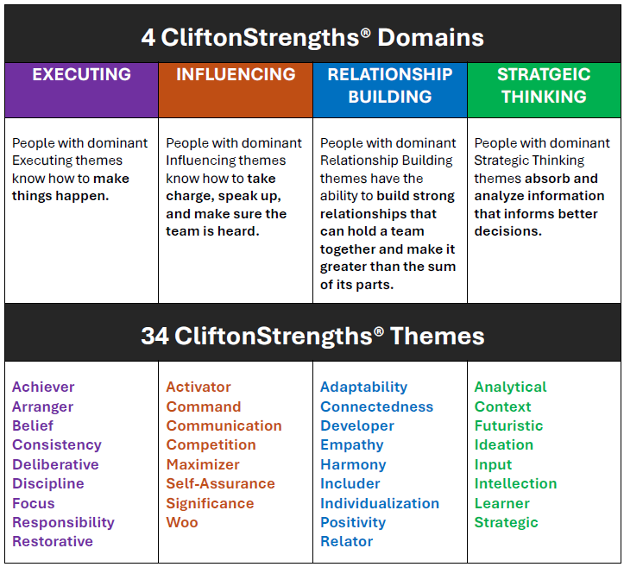
Each leader first understands themselves: a Hogan leadership-style and stress-behaviour profile shows how they lead, communicate and behave under pressure, and CliftonStrengths, still known to many as StrengthsFinder, shows the strengths they bring. Every leader receives a private debrief, because honest self-review happens best in private.
2. Leadership integration workshop
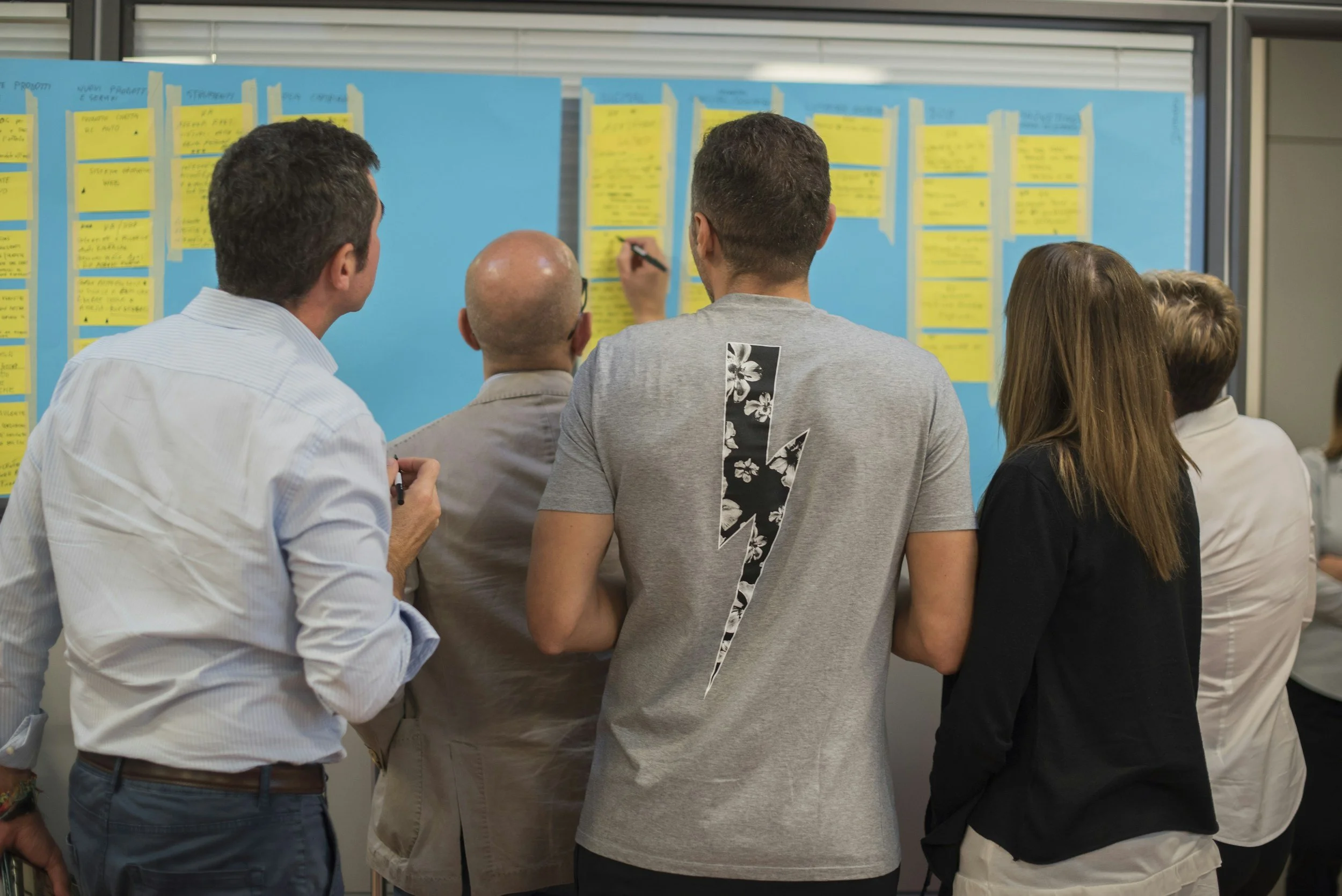
A facilitated session to turn individual insights into a single agreed-upon way of leading. Guided discussion produces the team's leadership statement, its ways of working, an aligned vision and behavior, and a direct link to the strategic planning.

3. 90 days of follow-up and leadership coaching
Teams are inspired on the day of the workshop; they are integrated in the months that follow, so the follow-up runs for 90 days: monthly check-ins on what held, what changed, and what needs a second pass. Where a leader wants individual depth, add one-on-one executive coaching, Hogan-informed, strengths-based and outcome-focused: one behavior from the leadership statement at a time.

4. One leadership team, one message to all staff
The final action is to communicate the leadership statement to the entire organisation. The leadership team presents it together, so every employee hears the same message from every leader, in town halls, all-staff messages, and Christmas and New Year messages to staff. Leaders take this opportunity to receive feedback and deeply listen to employees’ thoughts. A 2-way communication helps build trust across the organisation.
That is leadership integration. It brings new leaders together into one team, and one team turns the strategy plan into success.
Dorothy Liu · Founder, Bright Ground
Keep reading: AI Arrives Twice
