
AI Arrives Twice
In every retail business, AI arrives once to change the work and once to change how people feel about the work. Most businesses focus on the first.
Only 19% of frontline retail employees say their store is ready for AI. Retail is not short of AI plans. The gap sits between the plans and the people expected to work with them, and it will not close on its own.
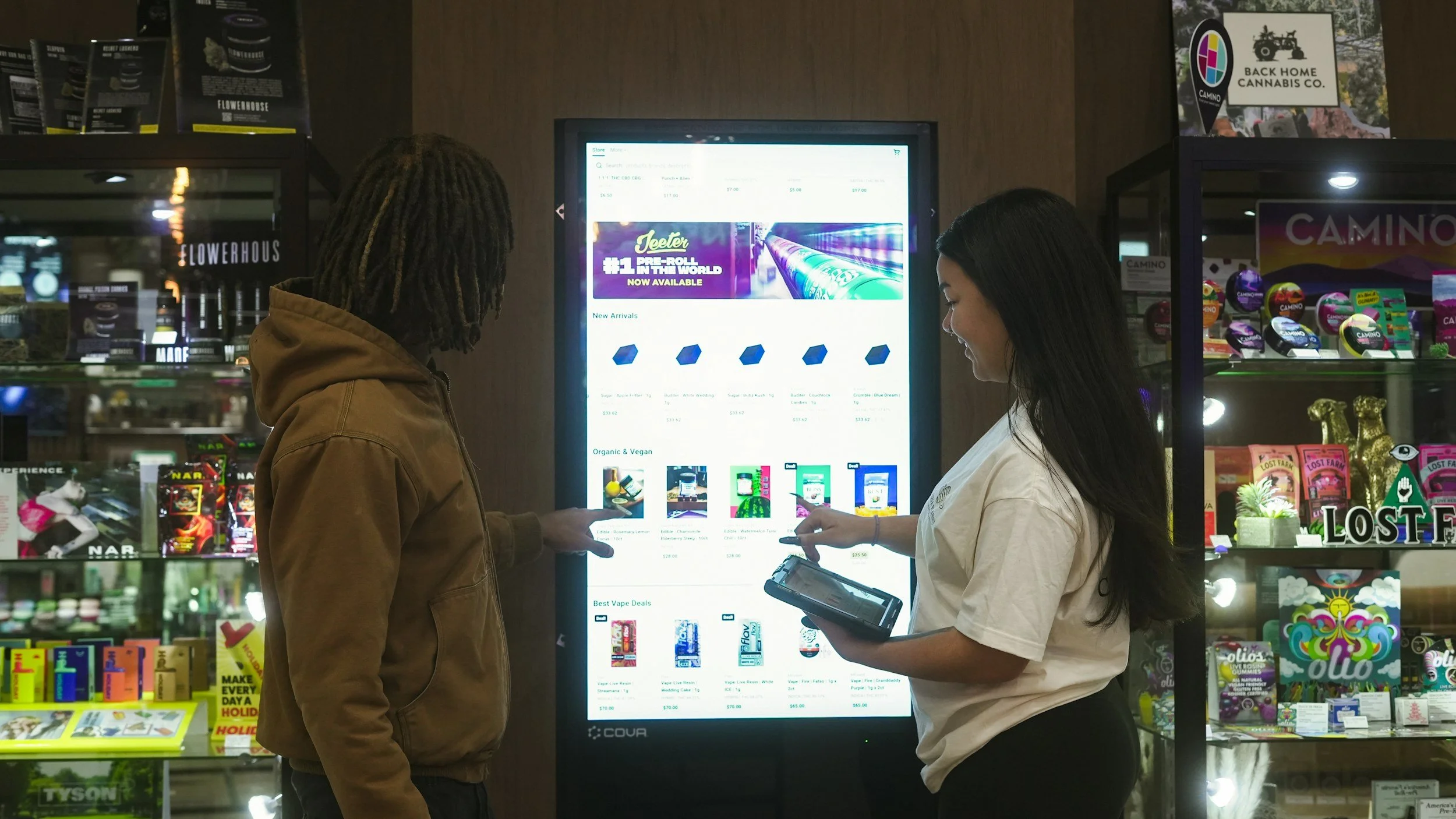
AI is already reshaping retail.
AI is reshaping how consumers shop. More shopping journeys now begin with a question to an assistant rather than a stroll past a shopfront, and a growing share of purchases are decided before anyone reaches a store. The sale itself can happen on a marketplace, inside an app, or at the shelf, and the profit pools are shifting with it, away from the transaction and toward advertising, data and services.
Retailers are responding at scale. BCG reports that total retail investment is set to rise by about a third in the coming years, with digital, IT, and AI operating spending rising by at least that much, and capital shifting toward AI platforms, data infrastructure, and supply-chain automation. In the organisations that manage this well, BCG projects above-store productivity rising by more than 30%.
I keep meeting businesses where the strategy is good, the plan is good, but the change still doesn’t fully land. The missing half is rarely the model. It is the people side: the work gets a plan, and the people are left to improvise.
The closer to the floor, the less ready people feel.
Readiness runs the other way. Four in five CEOs tell BCG they are more optimistic about their AI investment than a year ago, yet readiness thins out at every level below them. The closer people stand to the customer, the less ready they feel.
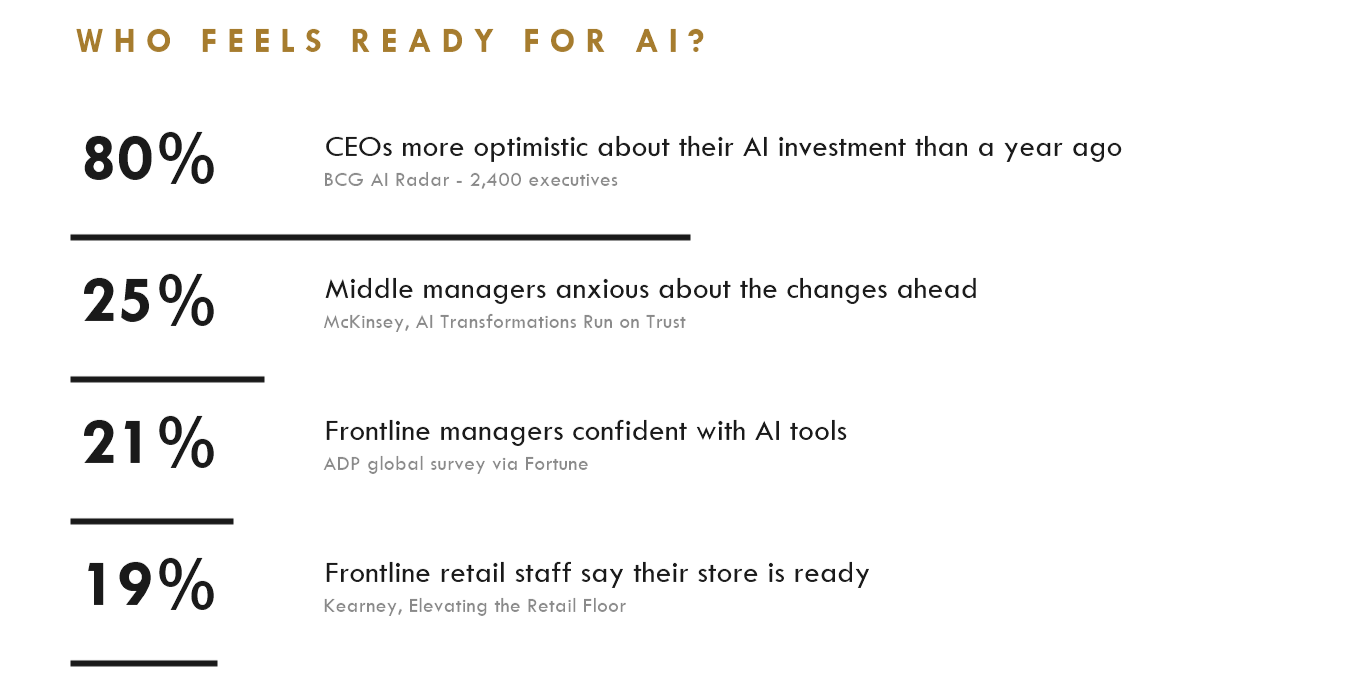
*80% of CEOs plan AI investment; only 19% of frontline retail workers say stores are ready.
Australia is no exception: only 41% of Australian workers say their workplace is prepared for AI, according to Salesforce's research with Morning Consult.
The early results echo it. That combination, strong plans at the top and quiet uncertainty on the floor, is not a technology problem. The people side of AI responds to planning just as well as the technology does.
AI arrives twice.
Here is the frame I find useful for everything above.
AI arrives twice in every retail business. The first time, it changes the work: what gets done, how fast, and by whom. The second time, it changes how people feel about the work.

The two arrivals move together: the work changes, people respond, and what they find reshapes the work again.
Keep the design open and remember both arrivals draw on the same two reserves: what your people can do, and what they believe. The first arrival spends both. The second is where you rebuild them, together.
One decision sits inside this frame, and your leadership team will make it within two years whether you choose to or not. Deloitte estimates AI can hand your frontline people back 44% of their time. Who gets it? More selling, better conversations, fewer hours? Nobody writes the answer on the wall. Your team will simply watch what you do.
The second arrival: five moves that make it land
1. Communicate early and clearly what AI means for jobs
Clarity is leadership's first task in the second arrival. State plainly what AI means for jobs in your business, and what it does not mean; if the honest answer is that some roles will change, say so, and say what you will do about it. Silence gets filled with the worst headline your team read this year.
In practice: one plain-language paragraph at kickoff, then the same message in every team meeting for six weeks, because repetition is what makes it believable.
2. Equip your people managers before the announcement
Frontline people managers are who your team will actually ask, so brief them first and make it their plan rather than an instruction they have to defend. Teams believe their manager long before they believe a head-office email.
In practice: a two-page brief per manager covering what is changing, what it means for jobs, and the ten questions they will actually get, with a rehearsal before the announcement so the first answers do not happen in front of their team.
3. Set roles and responsibilities for the change
Every rollout needs a named owner where the work happens, with the authority to review results and to decide, together with head office, when to keep, adjust, or drop a tool. Without an owner, good intentions stay intentions.
In practice: the manager owns the hours-saved number for the pilot, reviews it with the team at week two and week four, and brings the recommendation to head office.
4. Build trust: make it safe to say what is not working
Trust is what decides whether you hear the truth about a tool while you can still act on it. Where trust is low, problems surface after the pilot has already faded; where trust is high, people flag what is getting in the way early, and saying "this tool isn't helping me" carries no price.
In practice: a two-week keep, fix, or drop vote with the people using the tool, at least one visible fix before the next check-in, and a thank-you to whoever raised it.
5. Build capability on the job, not in the classroom
On-the-job means exactly that: the training happens during the shift, in short bursts, at the moment the skill is needed, taught by a peer rather than a trainer. Before any of it, redesign the role on paper: what leaves the job, and what judgment enters it. Then fifteen minutes at shift start, one skill at a time, for three weeks, with a one-page cheat sheet at the till. Skills learned between the stockroom and the register survive; skills learned in a conference room rarely make it to Monday.
In practice: pick one confident team member per store as the peer champion and let them run it.
The half that decides
The retailers that win the next five years will not be the ones with the most AI. They will be the ones whose people trust it enough to use, question, and improve it.
Dorothy Liu · Founder, Bright Ground
Sources: BCG, McKinsey, Kearney, ADP, EY, Deloitte — full studies available on request.
Keep reading: Organisation Redesign by Design, Not by Default
